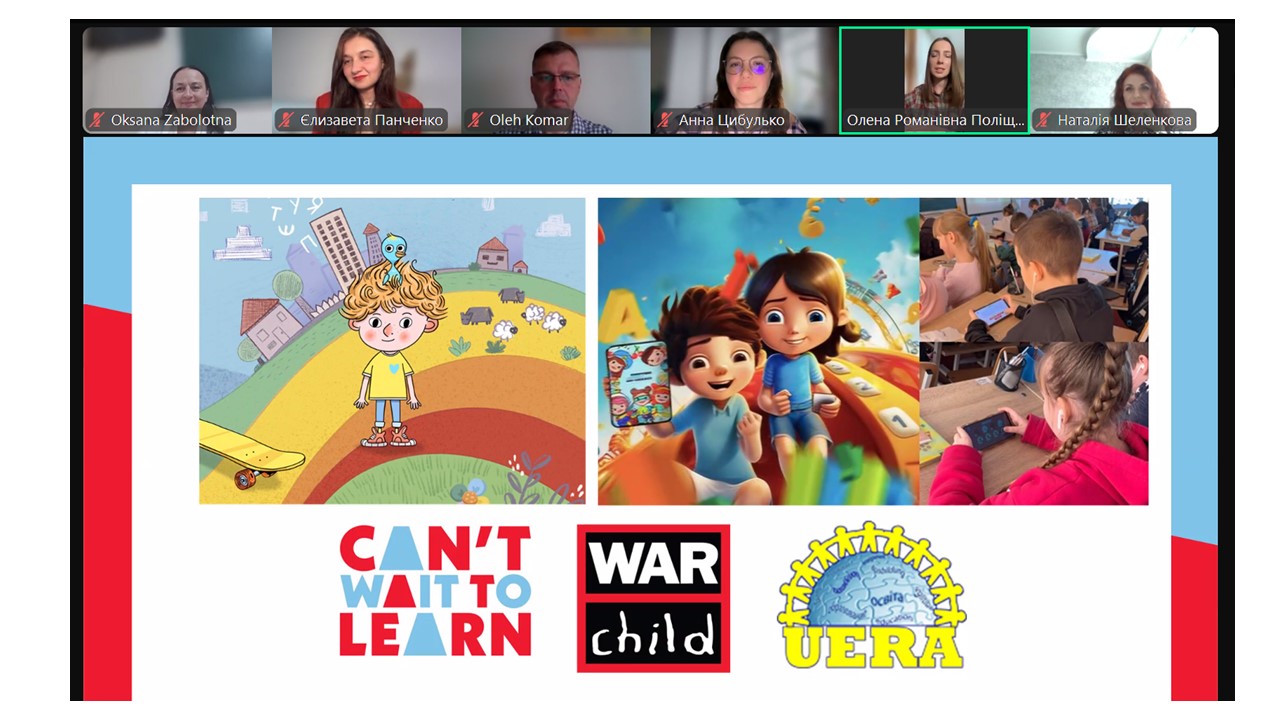
As part of the International Scientific and Practical Conference “Education for the Future: From Traditions to Innovations”, held on 1 May 2026 at Uman National University, Faculty of History and Philological Education, a round table entitled “Conducting Educational Research in Conditions of Uncertainty: the ‘Can’t Wait to Learn’ Programme in Ukraine” took place.
The event was moderated by Oksana Zabolotna, Doctor of Pedagogical Sciences, Professor of the Department of Foreign Languages and Intercultural Communication at Uman National University, and Research Coordinator for the War Child Alliance study. She facilitated the discussion and ensured a constructive dialogue among participants.
During the round table, the findings of the educational research project “Study of the Can’t Wait to Learn Programme in Ukraine” were presented.
 The Study of the Can’t Wait to Learn Programme in Ukraine is being implemented by War Child Alliance. Under the service agreement, the Ukrainian Educational Research Association conducted the field phase of a quasi-experimental study involving 36 schools in Cherkasy Region. The research was carried out between January and June 2025.
In 2025, the field research involved a multidisciplinary team of specialists, including psychologists, educators, and philologists, from different cities across Ukraine (Kyiv, Poltava, Uman, and Sumy). The team was united by a shared goal of improving children’s access to quality education in today’s challenging circumstances.
The participants discussed the specific challenges of conducting research in Ukraine, adherence to ethical procedures, building an effective research team, and establishing efficient communication. Particular attention was given to the practical aspects of the fieldwork phase, data collection processes, and overcoming difficulties caused by both external and internal factors.
The presenters shared the study findings, including the programme’s association with the development of students’ foundational skills, psychosocial well-being of students and teachers, and an analysis of the programme’s responsiveness to the needs of learners with special educational needs, as well as its inclusive potential.
Special attention was also paid to the challenges of conducting research under martial law, the role of flexibility and trust in achieving project objectives, and the importance of teamwork and adaptive decision-making.
At the conclusion of the round table, participants highlighted the high academic and practical value of the presentations, their relevance in the context of ongoing educational transformation, and the importance of further research for improving educational practices in Ukraine.